
EPISODE ONE
Full Episode Transcript: Escape
Tamson Pietsch: Welcome to History Lab. I’m Tamson Pietsch from the Australian Centre for Public History and UTS Impact Studios. This series is about something we all experience, but something some of us suffer from more than others.
It’s impalpable but inescapable, sometimes fair, sometimes frustrating. Yep, we’re talking about bureaucracy. It’s a major organising force we contend with in our day-to-day lives, and it’s an unavoidable feature of the modern state. Bureaucracy is a collective attempt to create systems and efficiencies in large and complex societies.
It’s supposed to be fair and just, a set of rules that everyone follows. But in reality, it’s often Byzantine, arbitrary and absurd. Rules are rigid; people are not. Official categories create privileges for some, but exclusions for others, and sometimes bureaucracy becomes a violent force that makes or breaks lives.
Our story starts in October 1938 in a quiet room in the Women’s College at the University of Sydney on Gadigal Land, where we’ll meet Camilla Wedgwood, who is writing a letter to a friend in England. Camilla, who is principal of the college, is responding to a request for help from a Jewish man trying to escape Nazi Germany. It’s a tense moment in history. War is looming in Europe and hundreds of thousands of people are already trying to flee.
But even in desperate flight, people face a barrage of mundane and banal bureaucratic rules and eligibility requirements that most are unable to meet.
It’s bureaucratic violence that has catastrophic implications for those who can’t overcome it and for the lucky few who do, who make it to Australia, there is more bureaucracy they have to face before they are truly safe.
There are rules, regulations and restrictions that hinder their ability to survive and to belong.
Letter from Camilla Wedgwood: Dear friend, I am chairman of a small committee out here which is trying to do something to help the non-Aryan Christians and others who do not come within the scope of the work of the Jewish committee…
Josh Bornstein: This is a letter from Camilla Wedgwood writing to a woman named Evelyn Harvey in England. Camilla and Evelyn are both trying to help refugees fleeing Nazi persecution in Germany. One of these people is Dr. Richard Fuchs, a German Jewish architect, composer, and musician.
Fuchs lives in Berlin with his wife and two young children, and he wants to know whether he and his family can escape to Australia.
Letter from Camilla Wedgwood: Theoretically, all that is necessary is that the would-be immigrant should have a sufficient amount of landing money and satisfy the authorities at Canberra that he is likely to be able to make a livelihood here. Actually, because there is a very large number of people trying to get out here now from Germany and Austria, the powers that be are picking and choosing whom they will admit…
Josh Bornstein: By the time Camilla was writing her letter in late 1938, the Nazi regime had been in power in Germany for five years and had just annexed Austria and occupied Czechoslovakia. More than 100,000 Jews and other persecuted minorities had fled, and many more were now trying to flee. Finding refuge was precarious.
For increasingly desperate German Jews, anywhere would do.
Letter from Camilla Wedgwood: There are two ways of getting a permit, or rather of applying for one. A, the would-be immigrant applies direct to Canberra, sending with the application form two photographs, police certificate, and health certificate, and if he has them, such testimonial as will show the type and quality of work which he has done.
He must also have at least two hundred pound Australian, which he can show to the immigration authorities on arrival…
Josh Bornstein: In the 1930s, Australia prioritized British migration under the White Australia Policy. For everyone else, it was difficult. A system of landing permits was used to refuse or limit entry to anyone deemed undesirable, a euphemism for not being white Anglo-Saxon.
Letter from Camilla Wedgwood: B, the second way to try to get a permit is to find some Australian who will nominate the would-be immigrant. This is usually a slow process, and it is very hard to find someone who will do this for a complete stranger.
Josh Bornstein: By the time she’s writing this letter, Camilla Wedgwood has tried to get Australian landing permits for hundreds of people fleeing Europe. Her success rate has been pitifully low.
Letter from Camilla Wedgwood: In general, Canberra does not smile on the applications of people over the age of forty-five, and it definitely prefers people under thirty-five, particularly if they have young children.
Josh Bornstein: Australia was just emerging from the worst of the Great Depression. Unemployment was still high and as another war loomed, anti-immigrant sentiment was intensifying.
Letter from Camilla Wedgwood: Also, there is practically no hope for anyone whose profession is law, medicine, or anything academic. There is also a considerable glut of chemists.
For architects, there do seem still to be possible openings, though of course they will have to begin in a very small way and work themselves up gradually.
Josh Bornstein: And so for Dr. Fuchs, an architect as well as a musician, there’s hope. Camilla Wedgwood encourages his application, explains it will take at least two months and issues an important warning.
Letter from Camilla Wedgwood: when filling in his papers, I think it would be wiser not to say anything about his being a musician for fear that the powers that be should think that he had any intention of trying to earn his living out here through his music.
The musicians’ trade union out here is very strong and very anti-immigrant. They’re nearly as bad in this respect as the doctors, and that is saying a good deal.
Josh Bornstein: This letter, along with hundreds more written to and from Camilla Wedgwood, is stored in the Quaker archives, now held at the Jewish Museum in Sydney.
I’m Josh Bornstein. For the last 25 years or so, I’ve worked as a lawyer practicing primarily in the area of employment and industrial relations, representing Australian trade unions and employees. I’ve also had a strong interest in human rights and social justice since I was a little kid, and from time to time, I was able to pursue that through my job in cases, for example, on behalf of refugees.
I’m here and speaking to you now because my grandparents, Zelman and Jean Bornstein, were able to flee Poland in 1938 just before the Nazis began slaughtering members of their families and millions of others.
As part of a research project on the lives of lawyers who fled fascism in Europe around World War II, researchers Katherine Biber, Sara Dehm, and Ana Filipa Vrdoljak have uncovered hundreds of stories of ordinary people whose lives were suddenly uprooted by fascism and war.
Some of the stories end in escape and rescue. Most of them end in tragedy. Dr. Fuchs never made it to Australia. He was imprisoned in the Dachau concentration camp in November 1938, just days after Wedgwood wrote this letter. Luckily, Australia wasn’t the only place he tried.
When New Zealand granted him an immigration permit, the Nazis let him go. Richard Fuchs composed some of the music you’re hearing in this episode. Katherine Biber is a legal scholar, criminologist, historian, and professor of law at the University of Technology Sydney.
Katherine Biber: My research is interested in how people who were escaping from Europe to Australia in the 1930s and 1940s, most, but not all of them, Jews experienced ongoing forms of bureaucratic violence that would categorize them in life changing ways.
Josh Bornstein: Katherine has spent hours combing through archives around the world trying to understand what happened to people who tried to get out of Europe as fascism spread.
Katherine Biber: People were frantically making inquiries all over the world to see what pathways might be available to them, what rules they needed to comply with. And so what it did do was trigger a huge volume of correspondence, much of which still survives today in the archives.
Josh Bornstein: Along the way, she’s uncovered remarkable people who tried to help with escape and rescue.
Katherine Biber: Camilla Wedgewood was born in England in 1901. She comes from a storied family. They’re related to the Wedgewood potteries. They’re also related to the Darwins. She’s also related to the composer, Ralph Vaughn Williams. So she comes from this very kind of ruling class family that are cultured and intellectual.
She had, I think it’s fair to say, pretty eclectic intellectual passions. She loved drama. She loved Icelandic culture. She loved studying old Norse language. She was into debating. She was also though interested in indigenous cultures, but all kinds of indigenous cultures.
And that’s probably the fascination that led her to Cambridge where she studied anthropology but also during her university studies, she joins the Society of Friends, which is also known as the Quakers. And she combines all of these different interests and commitments into a kind of religious or spiritual or ideological way of living that is uniquely hers
She is a high achieving student at the University of Cambridge, but because she’s a woman, she cannot receive a degree. But what she is offered is this job at the University of Sydney in 1928 because another anthropologist has died during field work.
Josh Bornstein: Sydney University had admitted women as students since 1881, one of the first universities in the world to do so. But 50 years later, in the 1930s, women academics and researchers were still extremely rare.
Katherine Biber: In 1935 she’s appointed to the principal of women’s college at the University of Sydney. She has this kind of tireless energy and she soon afterwards becomes secretary of what’s at the time called the German Emergency Committee and would later become the European Emergency Committee. A very small group. Basically it has three members. They’re all Quakers, and they commit themselves to trying to rescue people from Nazi persecution.
From the archives that survive of her work. You can see that she is a very exhaustive letter writer . Thankfully she keeps carbons of a lot of her typed responses to people. So we have not only the letters she received, but also the responses that she sent.
Letter from Camilla Wedgwood: 8th of March, 1939.
Dear Alice, thank you very much for your letter of February 24th.
I wish I could give you more advice and help on the problem of getting German and Austrian refugees out here. The situation is really rather difficult because quite apart from the financial difficulty of raising the necessary landing money….
Katherine Biber: And she sends these long, detailed explanations to try and help navigate people through the process that is ahead of them. She’s also very much trying to be a problem solver. She’s saying to people these are all of the steps. These are all of the classifications. This is the group that might be able to help you with the money. This is the group that might be able to help you with the guarantor. This is the person who might be able to expedite your claim.
Sometimes she’s just telling a person, your problem is insurmountable. And I’m sorry.
Letter from Camilla Wedgwood: Dear Lady Sulman, thank you for your letter, which I received a few days ago. I’m afraid that the prospects for Dr. Fisher are not very good. For one thing, I think he is probably rather too old, and I’m afraid that it would be almost impossible for him to get any promise of employment before he comes out.
This is all very depressing, but it is not fair to encourage people with false hopes.
Yours sincerely, Camilla Wedgwood.
Katherine Biber: I’m not sure it’s possible to know how many people tried to get to Australia. There’s no records that capture all of that because some people who tried did not try in any formal process. They were contacting agencies or individuals who they thought might be able to help them, but they were also trying to get to other places at the same time.
Letter from Camilla Wedgwood: I do not think there is the slightest chance of Canberra granting a permit to him. I’m afraid all that you can do for him is to break the news as gently as possible, that there is no hope for him.
I’m sorry if I seem to you hard, but one has got to steel one’s heart in this sort of job and realize where one’s limitations are. All this is rather depressing, I’m afraid, but false hopes can be cruel, and so it is better to recognize the difficulties of the situation.
Katherine Biber: Camilla Wedgewood understood the system now that applies in Australia and the huge, possibly overwhelming bureaucratic requirements that people are gonna need to fulfill. She probably understands that these are bureaucratic, violent systems that are punishing people, but she’s also helping people find their way through that system.
Josh Bornstein: When the Nazi Party rose to power in Germany in 1933, they immediately set about eliminating political opponents and consolidating their power into a totalitarian regime. Central to that regime was a myth of a superior racial group, the Aryan.
Katherine Biber: And the Aryan becomes an important organizing concept and very consequential. And everyone who does not fit within that type becomes subject to an escalating, intensifying series of exclusions, which begin to have a domino effect.
Josh Bornstein: The main group that was targeted was Jews. Romani, Black, and Slavic people were also deemed non-Aryan.
Other persecuted groups included homosexuals, people with disabilities, communists, and Freemasons. The 1935 Nuremberg Laws turned German Jews and other racialized Germans into non-citizens, stripping them of their civil rights This built on earlier moves to exclude non-Aryans from civic life, including the sacking of Jewish judges and disbarring of Jewish lawyers.
These people had no future in Europe. Groups of people and individuals from all over the world responded. In Australia, Jewish and non-Jewish organisations campaigned for the government to increase the number of landing permits for Jewish refugees. Camilla Wedgwood was one of them. Connecting people with potential jobs was an important step in the process.
Letter from Camilla Wedgwood: German Emergency Fellowship Committee, circular number three.
The following is a list of 50 persons who wish to make or have already made application for permission to come to Australia. Even the most general suggestions as to openings will be welcomed.
HB, 31, engineer, single, automobile or general engineering and foundry work, good certificates and references.
BO, 42, fruit distilling, wife and son age six, has run a factory for fruit juice distilling for 19 years, willing to do any work, wife trained in English cooking and in sewing, hairdressing.
JJ, 30, engineer, engaged to Jewish girl, mechanical construction, especially of gears, specially recommended by the friends.
WB, 41, engineer, wife, son age seven, extremely urgent, constructional engineer and architect, good references.
PP, 30, photographer, wife, son one year, actually a lawyer, but prepared to establish a studio since he has sufficient capital.
Josh Bornstein: The German Emergency Committee focused its efforts on a group of people widely referred to as “non-Aryan Christians”. Many of the people in this category are Christians who have some Jewish heritage.
Katherine Biber: People’s identity is being reshaped in the moment. So for example, if you’d never been Jewish, never lived a Jewish life, but had a Jewish grandparent or had a Jewish spouse, you became a non-Aryan
which brings with it this huge wave of exclusion, discrimination intensifying stress that is looming into what will become a regime of Mass death.
Josh Bornstein: The attempt to designate the Aryan racial category reveals a defining feature of bureaucratic violence, an attempt to circumscribe humans within strict categories to which different rules can be applied.
But humans are far more complicated than that.
Letter from Josiah Wedgwood: Dear Mr. Silverman,
I would like to petition your attention for two of my best refugees who I am very anxious to help to settle down in overseas.
Josh Bornstein: This Letter is written by Camilla Wedgwood’s father, a wealthy and well-connected British politician based in London. He’s also dedicating his time to refugee rescue, and here he is writing to the secretary of the Australian Jewish Welfare Society
Letter from Josiah Wedgwood: The girl is half Aryan, as Aryan in looks as the Nazis would like their women to be.
Josh Bornstein: There is an irony that refugee advocates adopted Nazi labels and concepts even as they tried to help Jews escape Nazi Germany.
Their language reflected Australia’s racist laws and policies. There was an arsenal of xenophobic racial categories which targeted migrants and also First Nations people. These were used to bolster a shared belief among many whites of their racial superiority.
Letter from Josiah Wedgwood: She received school education in England and speaks English perfectly with hardly the trace of any foreign accent. Her husband is Jew by race and religion. He worked for seven years in Vienna with his father, who was a timber merchant, and has since lost everything.
After graduating in law, he practiced in one of the Vienna law courts and was dismissed when Hitler invaded the country. I brought them into this country as transmigrants to the USA in possession of affidavits. Their turn in the American immigration quota may not come for years. I am trying to place them in Australia.
They will come with the necessary amount of two hundred pounds, and I have not the slightest doubt that both will adapt themselves and settle down in the shortest time possible. Thanking you for your attention.
Yours faithfully, Colonel the Right Honorable Josiah C. Wedgwood
Josh Bornstein: For Jewish refugees trying to reach Australia, the racist categories imposed by the Nazis persisted and were at times reinforced in how they needed to prove themselves worthy, desirable migrants.
Josiah Wedgwood enlists the help of his daughter Camilla, sending her a copy of his letter, but she’s already trying to help more people than she can manage.
In fact, people around the world soon recognized th-that the Jewish refugee crisis was much larger than any committee like Camilla’s could handle. So countries came together to find a solution.
Sara Dehm: The Evian Conference was held in a town called Evian in France in July of 1938, and it brought together delegates from 32 countries and was also attended by many civil society organizations as well, primarily Jewish advocacy organizations.
It was a meeting organized at the behest of the US President Roosevelt in order to address the perceived problem of Jewish refugees. And the conference was intended to encourage countries like Australia to commit to admitting more refugees from Europe.
Josh Bornstein: Sara Dehm is a legal scholar at the University of Technology Sydney who’s been working with Katherine Biber researching the lives of lawyers who fled from Europe as fascism took hold.
Sara Dehm: At the conference, the Australian representative, Colonel T.W. White, made a statement which has since become notorious for representing global unwillingness to accept more refugees. He said…
Colonel TW White: It will no doubt be appreciated also that we have no real racial problem. We are not desirous of importing one by encouraging any scheme of large scale foreign migration.
Sara Dehm: That said, in the following months, Australia would publicly make a commitment to accept 15 thousand German Austrian Jewish refugees over a three year period. But actually It was just making public a commitment that the Australian cabinet had previously made.
In many respects, the Evian Conference failed, countries, by and large, expressed sympathy towards Jewish refugees, but refuse to make public commitments.
Josh Bornstein: When the Allies declared war on Germany just over a year later, escape became much more difficult. Naval blockades made sea travel dangerous or impossible. Many of the 15,000 Jews Australia had agreed to accept couldn’t get here. But between 1933 and 1939, somewhere between 7,000 and 9,000 Jews made it to Australia,
Katherine Biber: Most of those came from Germany. Some of them came from Austria. A few also came from Czechoslovakia and Poland. And so that was already a large increase in the Jewish population that was already in Australia. But in that pre-war period, the way that Jews could get to Australia was by funding it themselves and drawing on their own local connections to other Jewish Australians and usually Jewish relatives.
Josh Bornstein: So who were those lucky few thousand who managed to navigate the bureaucratic nightmare? Amongst them were my two grandparents who had been trying to flee Poland for five years.
Katherine Biber: Look, when we think about bureaucratic systems, they’re systems that are created by humans. But most of the people who create them are lawyers. And the people who design those systems and implement those systems are lawyers or they are guided by lawyers.
Josh Bornstein: Among those who made it to Australia in the period around the Second World War were about 400 lawyers.
Katherine Biber: And so in our project, we’re interested not only in the design of these systems, but the lawyers who themselves become the subject of these systems. We’re interested in how lawyers experience bureaucracy when they’re forced to see it from the other side, as victims of bureaucratic violence. Because in some ways that illuminates the cruelty of these systems when even lawyers suffer as a result of their dehumanizing design and implementation.
Josh Bornstein: Did being a lawyer help some of these refugees get to Australia?
Sara Dehm: I think it’s a bit of luck. It’s a bit of social capital. It’s a bit about the networks that the lawyers would’ve had as a result of their particular profession and their social class. But it’s also completely arbitrary as well. The department had a quota in terms of how many landing permits it would approve in a given period. And there is that arbitraryness in terms of who managed to submit their application in a particular time, and who was able to get the capital together in order to meet the landing permit requirements as well.
Commonwealth of Australia. Application for permit to enter Australia.
To the Secretary, Department of the Interior, Canberra, Australia.
I, Dr. Eduard Korten, of Vienna, do hereby make application for permission to enter Australia, and in support of the same, submit the following particulars:
1) Full name: Dr. Edward Korten
2) Nationality: Austrian, Race: European
Sara Dehm: Edward Korten was born in Vienna in March of 1888, and he then went on to study law at the University of Vienna before becoming one of the leading Viennese barristers in commercial law.
He was well-educated and was a qualified translator. He’d done some legal work for the British Embassy in Vienna, and it seemed he had some very strong professional networks which would have assisted him to migrate to Australia.
2) I shall be accompanied by the following members of my family: wife, Elvira Korten. Age next birthday: 36, Birthplace: Cernauti, Romania. Children, Susanne Korten, female. Age next birthday: 7. Birthplace: Vienna
If necessary, I should first go alone
Sara Dehm: In those short words, it just shows the sheer desperation. they have to do whatever it takes.
6) My present occupation is: Lawyer, sworn interpreter for the English and French language
Sara Dehm: Korten applies for a landing permit on the 6th of April of 1938, 25 days after the German invasion of Austria.
And in that time, he would’ve seen the public humiliation and targeting of Jews on the street. It would’ve been a really fearful climate in Vienna. Many Jews would’ve been scared to go out in public and he would’ve very likely known people including Jewish lawyers who would’ve been arrested and detained by the Nazi Gestapo in that short time already. And Korten, since the early 1930s, had been involved in an organized boycott of German goods, because of his opposition to the racist Nazi ideology.
Josh Bornstein: He’s one of a lucky few who receive a landing permit for Australia and in February 1939, he arrives on Gadigal land, Sydney with his wife and their daughter. Korten might have thought his struggle with Australian bureaucracy was over but he soon discovers fresh obstacles in his way.
Letter from Margaret Hay: Dear Dr. Evatt,
I am venturing to write to you about a friend of mine, Dr. Edward Korten. He is applying to be admitted to the bar, notwithstanding that the Barristers Admission Board, up to the present, has not considered him eligible for admission for reason only of his being technically an enemy alien…
Sara Dehm: Korten presumably would’ve known that he had to undertake further study once he arrives in Sydney. He is able to do that, and he manages just to pass the New South Wales barristers exam within an impressively short period of time.
Letter from Margaret Hay: As to the bar examination, I say with all the handicaps a middle-aged man must have in studying an entirely new system of law in a foreign language, Dr. Korten passed through the course in almost the minimum time, two years…
Sara Dehm: By October, 1941, Korten meets the educational requirements to qualify for admission to legal practice. And so that’s what he does. He applies for admission to the New South Wales Barristers Admission Board, which is a body of the New South Wales Supreme Court.
Letter from Margaret Hay: Dr. Korten and his wife suffered considerably through the Nazi regime. As far as I could tell from their knowledge of English classics and the British way of life, as well as from their spontaneous expressions of feeling before the war as well as after, they are genuinely pro-British.
I am yours sincerely, Hay.
Sara Dehm: Much like today, in order to be eligible for admission to legal practice, you need to meet educational requirements, but also certain professional standards of conduct, namely the fit and proper person’s test. And, on the basis of his professional life to date Korten believes himself to meet that test. Unfortunately, though, the barrister’s admission boards decides that you need to actually be a British subject in order to be deemed to be a fit and proper person.
The New South Wales Barristers admission Board had the option to take a more inclusive approach and to think more broadly around this requirement of who is a fit and proper person. Or then to play a gatekeeping role. And they chose the latter.
29th of October, 1942. To Dr. Edward Korten, 18/42 Macleay Street, Potts Point, Sydney. Your letter of 19 October was considered at a meeting of the Barristers’ Admission Board held yesterday, and the Board resolved that until you have acquired the status of a British subject, it is not prepared to approve of you as a fit and proper person to be made a barrister.
Yours faithfully, C.H. Herbert, Secretary, Barristers’ Admission Board.
Sara Dehm: He appeals to the Supreme Court and they uphold the decision of the barristers admission board, but at the same time the barristers admission board pass a new rule saying that you do have to be a British subject in order to be admitted into legal practice. But that rule only comes into effect from January, 1942 onwards. By the time he appeals to the high court, the high court relies on the fact that that rule is in place.
And they don’t need to go back to reinterpret the fit and proper person requirement because there now is a specific rule stipulating that you have to be a British subject to be admitted to legal practice in New South Wales.
Letter from Eduard Korten:
Sydney, 3rd December 1942.
To the Honorable Dr. H.V. Evatt, Commonwealth Attorney General Sir, I, the respectfully undersigned, a former barrister and solicitor of Vienna of 20 years standing, arrived in Australia as a refugee from Nazi oppression in January 1939.
Sara Dehm: For Korten it would’ve been a really absurd situation because he had been stripped of the right to practice law in Vienna by virtue of the Nazi race laws. And then he arrives in Australia. He undertakes the mandatory legal training to qualify for legal practice, but then again, he is told that he doesn’t have the right citizenship despite being effectively stripped of his previous citizenship. And so again, he’s being told that he has no right to practice here either again, on this basis of arbitrary status.
In a letter that Korten writes to Doc Evatt in December of 1942 to try and appeal to the then attorney General, he presents his situation as very desperate.
Letter from Eduard Korten: My financial resources are being depleted during the time of clerkship. The longer I shall be a clerk, the smaller my prospects ever to be able to practice at all. It is not only depressing to continue as a clerk if a man can do much better work. Having been very fit before, I acquired asthma through the change of climate, perhaps through continuous strain.
Sara Dehm: He was on a very small salary and it made it very difficult for him to support his family while they were trying to reestablish themselves in Sydney.
Letter from Eduard Korten: I’ve been strongly advised to move at least ten miles distance from the sea, but I’m unable to do so with my present income. As a father of a child of twelve years, being fifty-four myself, I ought to restore my health not only for myself.
Sara Dehm: I think we can think about it as kind of a blunt form of bureaucratic violence in terms of its effects. Korten had to wait the full five years until he was naturalized, before he could be admitted to legal practice. And it’s clear from his own accounts of that period that that was quite a humiliating process for him.
Letter from Herbert Vere Evatt:
Dear Dr. Korten,
I acknowledge your letter of 3rd December 1942 in relation to your application for admission to the Bar of New South Wales. I regret that I have no power to deal with such matters. Admission to the Bar of New South Wales is controlled under statutes of that state and under rules of the Supreme Court of that state.
Yours faithfully, H.V. Evatt
Sara: In the decade that Korten is in Sydney, it’s a really difficult time for him. He has to battle bureaucracy, not only in relation to his admission to legal practice, but then also subsequently around questions of naturalization.
And then his life is cut short. So At the age of 60, he has a heart attack on the steps of the Supreme Court in September of 1948 which may have been the product of the various difficulties that he experienced during his time in Sydney.
Sara Dehm: This is a textbook case of bureaucratic violence where categories are used in order to police the boundaries of inclusion ,
Even when it results in some quite stark injustices or inhumane consequences.
Katherine Biber: The legal profession in Australia, like most of the professions, believed that it had a strong connection with Britain. That the laws that were enforced that the way that justice was done was British
There was absolutely no sense that this was aboriginal land and that aboriginal laws were in place and so the idea that legal professionals were British subjects was tethered to the idea that the legal process was a British inheritance. Imagining that the British legal profession is whiter than in fact it was.
There is just such a collective shared expectation that Australia should be a white nation and that the legal profession should be a British inheritance, so I think that there is not even a consciousness that what’s being enforced is a kind of racialized exclusion that this British subject requirement is an enforcement of the white Australia policy.
Josh Bornstein: Around the same time as Korten struggled to find a foothold in Sydney, further south, another German Jewish lawyer was battling the bureaucracy.
Sara Dehm: Rudolph Kahn and his wife Johanna, and their then five year old daughter Mary Anne, arrive in Melbourne, Narm, in December of 1938.For Kahn, having practiced in England meant that he didn’t have to undertake additional legal qualifications or legal study when he came to Melbourne.
Josh Bornstein: But the right education wasn’t enough. Like Korten, Kahn had to be a British subject. After the Board of Examiners refused his application, he decided to appeal that decision to the Victorian Supreme Court.
Newspaper Archive:
The Sun, 2nd of May 1939.
Refugees appeal. Lawyer wants to practice.
A German refugee lawyer, Dr. Rudolf Ernst Kahn of St. Kilda Road, unsuccessfully appealed to the State Full Court today against a decision of the Legal Board of Examiners refusing him a certificate which would entitle him to admission as a barrister and solicitor.
The ground on which the board refused Dr. Kahn a certificate for admission was that a certificate of two barristers and solicitors accompanying his application to the board did not state that he was a natural-born or naturalized British subject.
Sara Dehm: So then Dr. Kahn decides to apply for special leave to the high court
Newspaper Archive:
Daily Mercury, Saturday 22nd of July 1939.
German lawyer Victorian practice refused. Full High Court’s decision.
Dr. Rudolf Ernst Kahn, formerly of Germany and legal advisor to the British Embassy in Berlin, cannot practice as a barrister and solicitor in Victoria.
This was decided today by the Full Court of Australia, but Mr. Justice Evatt dissented.
Sara Dehm: Even though the Kahn judgment was unsuccessful, there was a significant amount of media attention to that decision. And in particular, interestingly, it foregrounded Justice Evatt’s dissent.
Judgement of Justice Herbert Vere Evatt: The court has no power to prevent an increase in the number of Victorian practitioners merely because it fears overcrowding of the profession. Despite his alienage, the federal authorities have admitted the applicant to reside in the Commonwealth. He cannot practice his profession in Germany because he’s of the Jewish faith or race.
So far, the federal government, while imposing severe restrictions upon entry, have refused to accentuate the consequences of the policy of persecuting Jews, which unfortunately has been adopted by a great European nation.
Sara: Justice Evatt had a really interesting career on the high court where he took a quite distinct approach to legal judgements.
In this case, for example, he was calling for a more liberal and humane approach to legal decision making and was prepared to dispense with formal requirements even though those requirements were legally made, he thought that they didn’t meet the needs of the applicant or society more generally.
Judgement of Justice Herbert Vere Evatt: England itself admits aliens to practice as barristers. Should Victoria plus royalist que le roi impose an absolute embargo? In the end, a liberal and humane policy is likely to turn out to be wise as well as just.
Sara Dehm: And he was more prepared to hold onto questions of justice in this case and I understand in other cases as well. And then he went on to become Australia’s attorney general .
Josh Bornstein: The attorney general who Edward Korten writes a desperate letter to and who responds, Dear Dr. Korten…
Letter from Herbert Vere Evatt: I acknowledge your letter of 3rd December 1942 in relation to your application for admission to the Bar of New South Wales. I regret that I have no power to deal with such matters…
Katherine Biber: When Doc Evatt is a judge on the high court, the job of a judge is to interpret the law. And there are multiple different interpretations of the law that are always available . When he decides in the way that he does, it’s because he’s bringing an interpretation to the law. One for which he becomes quite well known actually.
Josh Bornstein: As a judge, Evatt becomes renowned for his humane approach.
Katherine Biber: The job of an attorney general is a different job. when Evatt becomes the attorney general, his job is to enforce the law and it doesn’t matter what his opinion of the law is.
Josh Bornstein: In the bureaucratic and political role of attorney general, Evatt’s humanity is lost
Sara Dehm: Unlike Korten who has to wait the full five years in order to be naturalized and then eligible for admission to legal practice, Kahn is able to be naturalized within around a year of arriving in Australia. And then can also be admitted to legal practice. And what this means is, unlike Korten who has a really difficult life in Sydney for those five years, he really struggles financially and also emotionally with his exclusion from legal practice, Kahn is able to establish himself quite quickly as a sole practitioner. And then, together with another German emigre lawyer, they create a legal partnership that, appears to create a thriving legal practice within a few years of arriving in Melbourne.
Those two cases really starkly show the impact that arbitrary bureaucratic rules can have on individual lives. The real contrast between Kahn and Korten in terms of their professional opportunities, but also the course of their life more generally, the impact it has on their health, their wellbeing, their, their sense of self. And their families.
Josh Bornstein: The rule that lawyers had to be British subjects in order to be admitted to the legal profession remained in place in Australia until the 1970s
Sara Dehm: This history has enduring legacies. In a very immediate sense the cultural composition of the legal profession today does not reflect the diversity of Australian society. And we can think about that as partly the product of these exclusionary rules that have played a fundamental gatekeeping role over the course of the 20th century, right up until the 1970s, really.
But I think also on a broader level, we can think about this history as a history of bureaucratic violence, the way in which official neutral categories get used to discriminate between people and to police who has access to particular resources or entitlements. And the way in which these categories then are given meaning through particular sort of bureaucratic or official cultures I think it’s a telling example of the human implications of what happens when official or bureaucratic cultures don’t value diversity or don’t value ideas of human dignity around ensuring that people have a right to work or to be fully included in a political community or to be treated with respect.
Katherine Biber: The different life courses of Kahn and Korten are probably exemplary of the migration experience. Some people migrate and flourish. Some people migrate and do not. And the law allows some people to thrive and succeed, and it blocks some people from following successful pathways.
And maybe it gives us pause to reflect on whether the law and its cruelties requires us to be constantly attentive and skeptical. Or whether we just relinquish all of that and say, well, the law is the law. I’m sorry for those people for whom it turned out badly.
Josh Bornstein: In the next episode, we’ll learn about a new category that bureaucracy imposes on people when World War II begins, the enemy alien. If the enemy of my enemy is my friend, well then many of these people should’ve been warmly welcomed to Australia, but they met a very different fate.
CREDITS
Emergency Exit was written and produced by Olivia Rosenman for Impact Studios. The collaborating scholars were Katherine Biber, Sara Dehm, and Ana Filipa Vrdoljak. Additional research by Eloise Chandler. Emergency Exit was supported by funding from the Australian Research Council.
To see the letters in this episode and to learn more, visit emergencyexit.com.au
Thank you to everyone we interviewed and all the voice actors for this episode. Dr. Eureka Henrich, Justice Hament Dhanji, Professor Steve Hochstadt, Carina Camamile, Phoebe Borwick, Gideon Haigh, Bernhard Schmitz, Jonty Claypole, Rosa Saladino, and Paul McCartan.
And a special thank you to Danny Mulheron, the grandson of Richard Fuchs, for allowing us to use his grandfather’s music throughout this episode.
END
ESCAPE
The Nazi rise to power looms over Europe in the 1930s, causing an exodus of emigrants seeking refuge from persecution. But fleeing fascism involves contending with the arcane – and often arbitrary – immigration systems of other countries who turn a blind eye to the unfolding crisis. Some escape; most do not.
In Australia, a woman named Camilla Wedgwood works tirelessly, trying to help refugees navigate the requirements for would-be immigrants. Through her letters, archival records and personal stories, we meet individuals like German architect Richard Fuchs and Austrian lawyer Eduard Korten, whose futures were shaped by bureaucratic rules about money, age, profession and race.
The episode reveals how seemingly neutral systems such as immigration permits, professional admissions and citizenship rules, can shape lives in profound and unequal ways. What happens when rigid categories fail to reflect the complexity of human lives? How do lawyers – who are pivotal in forming bureaucratic rules – respond when they become the victims of them? Through the stories of real people whose survival hinged on bureaucratic decisions, this podcast introduces the concept of bureaucratic violence: a quiet but devastating force that determines who is allowed to belong, and who is left behind.
Featured in Episode One
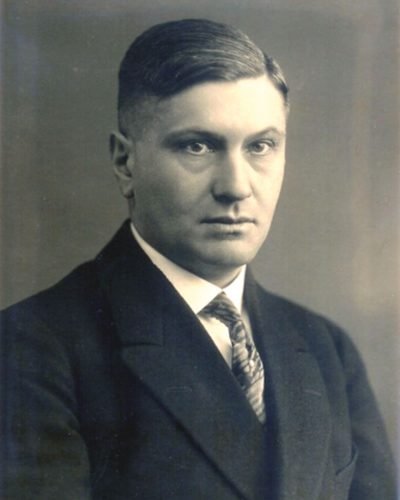
Richard Fuchs
Richard Fuchs (1887-1947) was a German architect, pianist and composer. Because he was Jewish, his music was suppressed by the Nazis, and only performed to Jewish audiences, or not at all. After Kristallnacht, he was imprisoned in Dachau concentration camp. Upon being issued a visa to New Zealand, he was released by the Nazis. He migrated with his wife and daughters in 1939.
Records in Emergency Exit reveal Fuchs’ unsuccessful attempt to flee to Australia. More information about Fuchs, as well as the documentary film, The Third Richard, directed by his grandson Danny Mulheron, are accessible at: richardfuchs.nz
We are grateful to Danny Mulheron for permission to use his grandfather’s music in episode 1 of Emergency Exit.
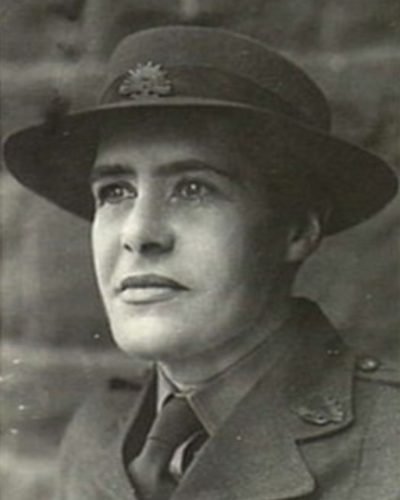
Camilla Wedgwood
Camilla Wedgwood (1901-1955) was a British-born anthropologist, educator, pacifist and activist.
Emergency Exit highlights her role as a refugee advocate, when she was secretary of the Germany Emergency Fellowship Committee from 1937, whilst Principal of the Women’s College at the University of Sydney.
Read her biography at the Australian Dictionary of Biography here.
Explore some of her correspondence for the German Emergency Fellowship Committee held at the Sydney Jewish Museum.
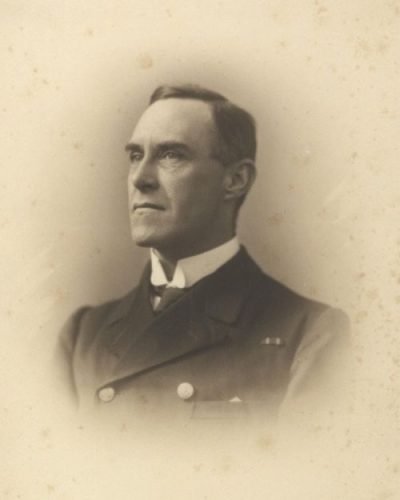
Josiah Wedgwood
Josiah Wedgwood IV (1872-1943) was a British member of parliament, descended from the Wedgwood pottery family. One of his seven children was Camilla Wedgwood. Outspoken on many issues, including refugees from Nazism, Josiah’s correspondence with his daughter Camilla can be heard in Emergency Exit.
The J.C. Wedgwood Papers are held at Keele University, and can be explored here.
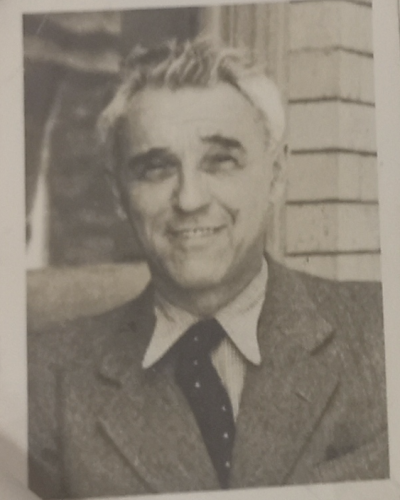
Eduard Korten
Dr Eduard (Edward) Korten (1888-1948) was an Austrian-born Jewish lawyer who eventually practiced as a barrister and then solicitor in NSW. Graduating with a doctorate in law from the University in Vienna in 1911, Dr Korten was one of the leading barristers in Vienna practicing in insurance law in the 1930s. Following the Nazi annexation of Austria in March 1938, Dr Korten fled to Switzerland in June 1938, where is he managed to secure travel documents to Australia for himself, his wife Elvira and their young daughter Susanne. During his time in exile, he was formally disbarred from legal practice in Austria in November 1938.
Following the Korten family’s arrival in Sydney in February 1939, Dr Korten practiced as a law clerk while completing additional legal study at the University of Sydney in order to qualify for admission to legal practice in NSW.
Read More
From November 1939 onwards, the NSW Barristers’ Admission Board twice rejected his application for admission to legal practice in NSW, on the basis of Dr Korten’s status as a non-British subject and stateless alien. He would eventually be admitted to legal practice in NSW in March 1944, following his naturalisation.
During his time in Sydney, Dr Korten publicly supported the predicament and rights of Jewish refugees in Australia and advocated for reparations for Nazi crimes. In a 1946 Letter to the Attorney General’s Department advocating for naturalisation rights, he noted the desire of some refugees to seek justice for their expulsions:
“There has also been in many of us the wish for a last time to enter our countries of origin as free men and members of a new civilised community, after having left those countries as despised slaves. Probably many of us do not only wish to attend the graves of our dead ones, and to meet our surviving friends and relatives, but also to see some of those who took part in our expulsion, and to give them a piece of our mind.”
A longer profile on his life is available here.
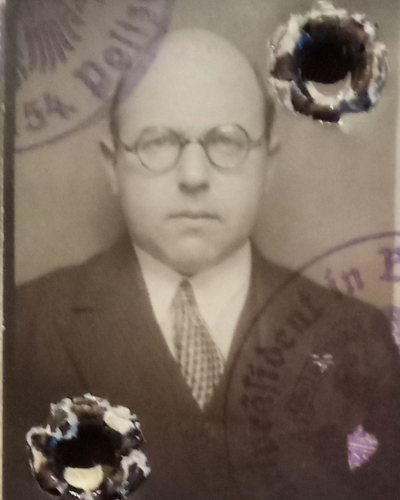
Rudolf Kahn
Rudolf Kahn (1896-1978) was a German-born lawyer who mounted an important High Court challenge to the exclusion of non-British subjects from legal practice in Victoria. Although his legal challenge was unsuccessful, it garnered public attention and debate in the Australian media.
Following his admission to the Berlin Bar, Kahn read law in London from 1925 onwards and was admitted as a barrister to Gray’s Inn from June 1929 until January 1930. He subsequently returned to Berlin, where he served as an Honorary Legal Advisor at the British Embassy and lectured at Berlin University. Following Hitler’s assumption of power in Germany, Kahn briefly returned to London in October 1933, before relocating to Shanghai with his wife Johanna and young child to Shanghai in March 1934.
Read More
In Shanghai, he practiced at the British Consular Courts in China and lectured at Soochow University until July 1937.
After arriving in Melbourne in December 1938, his initial bid for admission to legal practice was unsuccessful, with the Victorian Board of Examiners rejecting his application in April 1939. The High Court’s Kahn decision from July 1939 remains an important case in the history of the development of the Australian legal profession and its exclusions on the basis of the racialised idea of British subjecthood.
Kahn was eventually admitted to legal practice in Victoria in April 1940, following his expedited naturalisation. He would go on to establish a thriving legal practice, in partnership with fellow German émigré and former judge Dr Hans Erich Clahr. The law firm exists to this day.
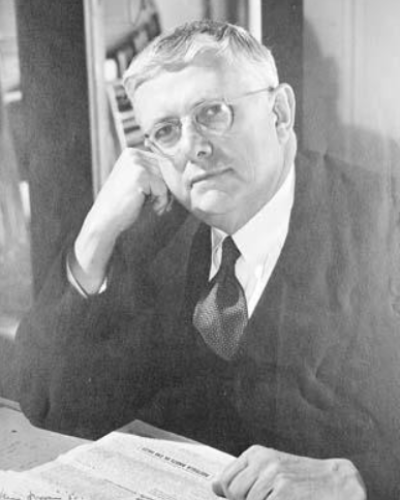
H.V (“Doc”) Evatt
Herbert Vere ‘Doc’ Evatt (1894-1965) was justice of the High Court of Australia from 1930 to 1940. During his time of the bench, as well as being involved in the Kahn case, Evatt found against the federal government’s exclusion of Egon Kirsh’s entering Australia.
He resigned from the Court so he could be elected a member of the federal parliament in 1941. He served as Commonwealth Attorney-General and Foreign Minister during the war. He travelled often to the US and UK during this period. He served in the British War Cabinet. He became Deputy Prime Minister in the Chifley Labor government after 1946. He supported the White Australia Policy.
Read More
Evatt was President of the United Nations’ General Assembly from 1948-1949 when it adopted the Universal Declaration on Human Rights and the Genocide Convention. He was also involved in the negotiations on the Palestine Question and establishment of the State of Israel.
He was opposition leader from 1951 to 1960. He campaigned successful against the Menzies’ government effort to amend the Constitution to ban the Communist Party.
He died in Canberra on 3 November 1954.
Read his biography at the Australian Dictionary of Biography.
Read Evatt’s decision in Kahn v The Board of Examiners (1939) 62 CLR 422
Read Evatt’s decision in The King v Wilson; Ex parte Kirsch (1934) 52 CLR 234.
Recording of Evatt before the UN General Assembly on adoption of the Universal Declaration of Human Rights and Genocide Convention in 1948
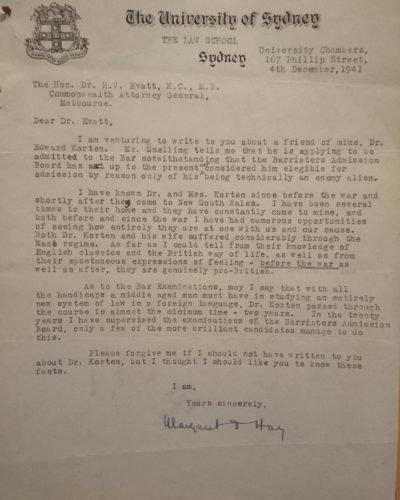
Margaret Hay
Margaret Hay (1889–1975) worked at the Faculty of Law, University of Sydney as a clerk, librarian and typist from 1919 until her retirement in 1953.
As Judy Mackinolty has written, Margaret Hay was “quick in mind and body” and “inspired loyalty, respect and affection” from academics and students in the Law Faculty as well as the legal profession and judiciary. She was an important link between students and academics, assisting students to obtain articled clerkships and graduate positions. She befriended Dr Eduard Korten during his time studying at the University of Sydney Law Faculty, including providing a warm reference for him in relation to his admission to legal practice.
A longer profile on her life is available here.
Episode Credits
Writer and Producer: Olivia Rosenman
Collaborating scholars: Katherine Biber, Sara Dehm, and Ana Filipa Vrdoljak
Additional research: Eloise Chandler
Sound design and audio engineering: Melissa May
Thank you to everyone we interviewed and all the voice actors for this episode. Dr. Eureka Henrich, Justice Hament Dhanji, Professor Steve Hochstadt, Carina Camamile, Phoebe Borwick, Gideon Haigh, Bernhard Schmitz, Jonty Claypole, Rosa Saladino, and Paul McCartan.
Special thank you to Danny Mulheron, the grandson of Richard Fuchs, for allowing us to use his grandfather’s music throughout this episode.
Additional music from Blue Dot Sessions.
Emergency Exit was supported by funding from the Australian Research Council.