
episode three
Full Episode Transcript: Displaced
Tamson Pietsch: Hello, history lovers. You’re listening to History Lab. I’m Tamson Pietsch from the Australian Centre for Public History and UTS Impact Studios.
And this is the third and final episode in our series on how bureaucratic systems have profound effects on human lives.
If you haven’t listened to the first two episodes, we recommend going back to begin at the start.
In this episode, we’ll meet a man who came to Australia after the Second World War as part of the Displaced Persons Program, one hundred and seventy thousand displaced people that Australia accepted after the war.
It was the biggest influx of non-British migrants to have arrived in Australia and the beginning of populate or perish, a government policy to increase the population in order to grow its defenses and its industry. But even in the face of the immense upheaval and impoverishment caused by the Second World War, Australia carefully selected migrants in its own interest.
And even though immigration was seen as necessary to safeguard Australia’s future, many new migrants landed in an atmosphere of hostility and fear. Fear of increased competition for jobs, for housing, and fear of the unknown. Migration was an imperative to grow the country’s industrial and military strength.
But as well as their bodies, new migrants brought with them their minds. Australians were ill-equipped for European philosophies and outlooks so foreign to their own
Tony Blackshield: His philosophical abstract speculations were always a little bit beyond me. And it was a prevailing belief system, but it was also a prevailing mood.
One of his published works begins with the words: “all day, I have been troubled by a nameless anxiety”, um, which is not the way I’ve ever written anything. Yeah. Um, no, I can’t pin him down. He spoke 11 languages fluently.
Josh Bornstein: Ilmar Tammelo was born in Estonia in 1917, and in his early adult life, he lived through its invasion and occupation by Soviet forces, then the Nazi German regime.
Michael Kirby: They wanted to get an insight into the thinking of the leaders of the Soviet Union and, the way to do that was Ilmar Tamelo’s huge collection of speeches. This is pre-internet days so this wasn’t something he could press a button and get them to appear. He had somehow brought them out to Australia and he translated them all. It was a huge pile and my job was to synthesize it, which I did.
Josh Bornstein: Tammelo was 31 years old in 1948 when he migrated to Australia. He was part of the Displaced Persons Scheme, an international response to the huge numbers of people displaced by World War II.
Arthur Glass: He was a mysterious figure. I was attracted to him, but I never spoke to him. And from my memory, he gave a couple of lectures on Abductive reasoning and he’d written a book on that. Which I never understood, to be honest.
Tony Blackshield: He was bald. My hair had started to recede when I was 17 and in 1963, Ilmar went overseas on a sabbatical and when he came back he got a toupee And I was bitterly disappointed and disillusioned and felt that he had betrayed us.
Josh Bornstein: At the Estonian Archives in an inner-city suburb of Sydney, there are three manila folders marked with his name.
Katherine Biber: He’s got one of the thicker files in this box.
Terry Kass: Yes. Three files. Yep. I didn’t sort these. Okay, let’s have a look at this one.
Katherine Biber: So do you know, did these come into the collection from him or from his wife? Or how did they end up here?
Josh Bornstein: That’s Katherine Biber, the UTS legal historian who’s been with us through this series. She’s speaking to Terje Kass, chief archivist at the Estonian Archives.
Terry Kass: These items come in various ways. When someone dies or is getting very old, sometimes we approach the family or the family offers us material. I’ve only been the chief archivist for two years, and I’m actually stunned at what is in here.
Um, let’s have a look at Tammelo’s file. Anyway, this one’s odds and ends. Articles in English and Estonian. That’s what that says. Okay. So work your way through that one. Sure
this one appears to be a number of articles and a photograph of him sitting roughly where you are.
Katherine Biber: Alright. Yes, I’ve seen that photo actually, maybe, yeah.
(Fade out field tape)
Katherine Biber: After the war in 1946, the United Nations has to create an organization to deal with tens of millions of people displaced by war. And so the DP scheme, the displaced persons scheme, is one of the proposed solutions. And Australia and many other nations offer to take a small number of people through the scheme to achieve their own local objectives.
Katherine Biber: Between 1947 and 1952, Australia received just over 170,000 people through the Displaced person’s scheme.
AUDIO ARCHIVE: At Bonegilla near Albury, they’re making new Australians. 840 people from the Baltic states are going to school here. For Australia’s migration policy is determined that never again shall our new citizens be forced to fend for themselves. (FADE MUSIC UNDER)
Katherine Biber: Australia needed more workers, Australia needed a larger population. But it took from the DP scheme along racially selective lines. It’s widely accepted now that the so-called beautiful balts, the people from the Baltic countries, were the ones Australia mostly. People from Estonia, Latvia, Lithuania also Polish people, some Yugoslavs, were the people who dominated the scheme because they fulfilled Australia’s visual sense of who belonged here. And Ilmar Tammelo as a former Estonian fit neatly within those objectives.
AUDIO ARCHIVE: We who are driven from our homes are overjoyed to be welcomed as new Australian citizens. Those horrible years now seem like a nightmare. Many of us have lost all their relatives and others cannot reach their loved ones. But Australia has given us the opportunity to start life anew.
Josh Bornstein: Australia committed to provide transport, accommodation, and employment for newly arrived DPs. To be accepted into the scheme, applicants had to sign a contract agreeing to do whatever job they were assigned for two years. The work was mostly physical labor
Tomorrow’s Australians (archive video): Some Australians may feel concerned at this influx of new citizens.
Sure, we better develop Australia, but it seems to me that these thousands of migrants coming here gonna do a lot of Australians outta jobs.
Perhaps the secretary of the Department of Immigration can throw some light on that. What is the answer, Mr. Hayes?
Well, today there are many more jobs in Australia than men to do them. As a matter of fact, our greatest shortage is manpower, both for defense and production. Furthermore, migrants will not make a shortage of jobs. They will make more jobs.
Katherine Biber: When he first came to Australia, Ilmar Tammelo was in the Bonegilla migrant reception center and he did mandatory labor. He was a forestry worker and he also worked at a few other places in regional New South Wales.
Josh Bornstein: For new arrivals in the DP scheme, their skills and professional experience didn’t matter. Tammelo’s training was in the law
Katherine Biber: He went to law school in Tartu, which is in Estonia. And It’s a much repeated anecdote about his life that in his first year of law school he studied Estonian law, then Soviet forces occupied Estonia. And so in his second year, he studied Soviet law. And then in his third year, Nazi forces invaded. And so in his third year, he studied German law. And so he studied all of these different legal systems. And then during the second World War, he went to Germany and did postgraduate legal studies.
Josh Bornstein: Tammelo lived in Germany during the worst years of the Nazi regime. What would that have been like for a young law student?
Katherine Biber: That’s a really good question and I certainly don’t have any insight into his psyche to know what his own relationship was to the Nazi regime, except to say that philosophically he was quite interested in mysticism and very non pragmatic legal theories and philosophies. My sense of him from speaking to people who were taught by him or who knew him was he kind of hovered above the realities through which he was living. People described him as really mysterious and exotic and charming and, complicated and sweet as if somehow the kind of sociopolitical realities that he was living through didn’t necessarily touch him. And I wonder if that in some way protected him, but maybe also isolated him from the more kind of literal acts of resistance that other people might have engaged in.
Josh Bornstein: Tammelo did have some Jewish heritage, but somehow he survived living through Nazi Germany. After the war, Estonia was reoccupied by the Soviet Union. Tammelo stayed in Germany for a while, serving as a lawyer in the American sector, investigating minor offenses committed during the war. He didn’t want to go back to Estonia, which is why he joined the displaced persons scheme and ended up a forestry worker in Victoria
Modern Logging in the 1950s Australian Diary 33 (archive video): Today, the easing of Australia’s housing shortage partly depends on the hardy timber cutters who are opening up virgin country and conquering the giants of the bush.
Josh Bornstein: Only Tammelo does not seem to have been particularly hardy
Katherine Biber: During his period of mandatory labor, he became very sick with tuberculosis and was hospitalized. So as far as I’m aware, he didn’t complete his two years of labor ’cause he wasn’t physically well enough to do so.
Josh Bornstein: While he was laid up in hospital, Tammelo passed the time by writing an essay for the Lutheran Quarterly about the human condition. It was called “Experience, Reason, Faith and Skepticism”.
Ilmar Tammelo (voice actor): As striving for such ideal knowledge is like sailing to the horizon which recedes while it is approached, because every advancement in knowledge brings new problems to be solved, academic skepticism seems to be the proper attitude for such research, reasoning, and faith.
Josh Bornstein: The article came to the attention of a law professor in Melbourne called Wolfgang Friedman. As a German Jewish judge, Friedman had fled the Nazi regime in 1934. His international network of legal scholars was wide and influential. We don’t know exactly how, but Friedman and Tammelo must have connected because by 1951, Tammelo was at the University of Melbourne undertaking a Master’s of Arts.
That same year, Freedman connected him with Julius Stone, who was a professor of international law and jurisprudence at the University of Sydney. Stone needed someone with Tammelo’s skills and knowledge to help him write a book about international law.
Katherine Biber: That’s a very important moment of transition from being a forestry worker to being a legal scholar.
Josh Bornstein: And it’s this move that brings him into an emerging circle of European lawyers and academics who are coming together in exile halfway across the world. But in their new home, they discovered that the Australian Legal Academy was mostly conservative, isolationist, and …
Katherine Biber: …not at all interested in European continental, legal or philosophical ideas.
Australian law schools were very narrow, very doctrinal. They were interested in learning what is the law and what procedures do you need to follow to enforce the law.
Josh Bornstein: Tammelo’s outlook and approach didn’t really fit.
Katherine Biber: His questions about psychology and society and philosophy were really unfamiliar and often unwelcome in Australian law schools at the time.
Josh Bornstein: For Tammelo, being hospitalized began a chain of events that ended with him meeting Julia Stone. A stroke of bad luck ultimately had a positive outcome for him.
Katherine Biber: Otherwise, I don’t think someone like Tammelo would have found the Australian Legal Academy to be at all welcoming to someone like him.
(PAUSE – TRANSITION – MUSIC)
Michael Kirby: I was very nervous because these were people whom I regarded as brilliant, and, who were brilliant and who were leaders of the world of jurisprudence in Australia, which is not the normal thing that common lawyers looked at or studied. They’d looked at the decisions of English judges and that was what most of my law course was involved with.
Josh Bornstein: One of the people who was shaped by that circle of misfit European lawyers was a man who went on to be a judge of the High Court of Australia
Michael Kirby: I’m Michael Kirby. I was a student at the University of Sydney when I studied the LLB course for qualifications to enter the law.
Josh Bornstein: A young Michael Kirby was nervously sitting in Ilmar Tammelo’s living room, waiting for a group of legal academics to finish their tea and cakes so they could begin discussing a paper he’d written about the doctrine of Soviet leaders at that time.
Michael Kirby: And I have a copy of it here by the sheerest of Chance. Ilmar with his command of German and of Russian had translated, tens, maybe even hundreds of papers, which were made up of the speeches of Soviet leaders.
and my essay was Dialectics and Law by Michael D. Kirby Sydney. And it it was my, my effort to analyze and synthesize this huge mountain of essays that had been produced by Ilmar Tammelo in his room at the Sydney Law School
Josh Bornstein: Having helped Julius Stone on a book, Stone then gave Ilmar Tammelo a job in his Department of Jurisprudence and International Law at the University of Sydney. Julius Stone was becoming an important figure in the Australian legal academy. The son of Lithuanian Jews himself, Stone’s appointment at Sydney in 1941 was met with opposition and controversy. He came with an established international reputation and wide networks in Europe and North America. Stone would transform how Australians understood the role of intellectuals in public life.
Katherine Biber: The legal education at the University of Sydney was what we would call black letter law. It’s an attempt to learn what the law is in the most precise, formal and legalistic way. It wasn’t about asking questions about whether it was good or whether it was fair or whether it was just, if you could identify the law and you could articulate the law, that was all you needed to do.
Michael Kirby: When I began my journey into law, it was overwhelmingly and powerfully English law . We would just get that stuff into our head and that was 90% of my work as a young law student.
Katherine Biber: And Julius Stone, when he came, was interested in jurisprudence and Stone’s approach was about connecting legal ideas and legal philosophies with the societies that produced them, identifying that there were different kinds of approaches and understandings of law and that people, human groups and human individuals wanted different things from the law.
How could they look to law for things like justice or for things like fairness or things like recognition. He was interested in, for example, what did the law do to minority groups ? What did the law do to particular cohorts in society? So he was interested in the law in its wider context. It was called sociological jurisprudence at the time. It was also still in formation at the time. But these were ideas that were quite outside of Sydney law school’s idea of itself. And so he was given his own department, students were to study under him one subject.
Michael Kirby: And here in the midst of us was this group of people, most of whom were from poorer and mysterious countries of Europe such as Estonia. And the bridge was provided by Julius Stone, whose family had come from Lithuania, but who’d spent, I think all of his life in England. And then later became Dean of law in Auckland, New Zealand, and subsequently professor of law in jurisprudence at the University of Sydney.
He was the bridge from an English legal tradition into the European legal tradition. But Ilmar Tammelo was pure European, and he had to teach aspects of legal jurisprudence as affecting the the law in Australia. But it, it, it was his, his interests and background and knowledge was fundamentally in European law.
He was a very big influence on me.
Josh Bornstein: The world was transformed after the Second World War, and so was the field of law. The events of the war had changed what people demanded from the law. The idea that it was simply a set of rules devoid of universal values was no longer tenable. But also the horrors of the war and the mass exodus of European people it caused led to a reevaluation of the law on a global scale.
Katherine Biber: One of the things that Julius Stone was interested in introducing to the University of Sydney was international law. Today we accept that it is an area of legal doctrine, but at this time a huge amount of energy had gone into producing parts of international law in response to the Second World War.
So international law was literally in formation and production in real time. And Stone was interested in engaging with that. And not everyone else at the University of Sydney thought that it was a legitimate field of law. But because the Second World War was producing international law, international legal institutions and also international causes of action in response to the law, reparations, compensation, displaced people.
These were all concepts that were produced by the Second World War. Genocide. All of these ideas were produced as new areas of law. So Stone was interested in that, and was connected with other people in the world who were producing international law.
Josh Bornstein: Tammelo would become an important figure in educating Australian students in international law.
Katherine Biber: Once Tammelo came into Stone’s orbit, stone saw his value and saw his skill and he saw that Tammelo’s knowledge and strengths really enhanced his own knowledge and that he needed Tammelo and Tammelo’s connections and Tammelo very wide ranging intellectual interests within his department.
And he continued to intensify the role of Tammelo in his own work, but also in the department. So for example, they would start teaching together. Tammelo would teach part of Stone’s course. So at the beginning, it probably was a relationship of patronage, but I think it became a much more genuinely collegiate relationship
Josh Bornstein: But Ilmar Tammelo was also seeking his own intellectual satisfaction.
Katherine Biber: So he established the Australian Society of Legal Philosophy, which continues today, and the idea of the society was to bring together people, to share ideas of legal philosophy. It was like a reading group. They would read the work of others. They would come together in people’s homes and they would have a discussion group about these ideas.
He would invite people from the department. He would also include students of the department.
Tony Blackshield: Well, it was always in somebody’s living room, the room would be comfortably full. I would certainly say more than 10 people. Less than 20. There’d be some refreshments. It was homely and everybody was comfortable.
Josh Bornstein: Anthony Blackshield, who died in 2025, was an internationally renowned expert on jurisprudence and constitutional law, and a respected legal scholar and educator. Back when he was enjoying refreshments in Ilmar Tammelo’s lounge room, he had just left a teaching role at Sydney University to become a founding member of the new law school at the University of New South Wales.
Michael Kirby: Well it wasn’t a full meal. We were not invited for lunch or for evening dinner. We were there for an afternoon tea. And it was tea or coffee. Usually I think coffee and we would be served with the kind of small royal Dalton cups. Cup saucer and plate.
Josh Bornstein: Someone would present a paper and another guest would have prepared a reply.
Tony Blackshield: And then it was open for general discussion and there was widespread general discussion. They were very lively meetings.
Michael Kirby: I always felt rather diffident to say anything because of the apparent erudition and brilliance of the interventions by these legal philosophers, scholars. But it was a great experience. That’s the type of experience a young person really needs to drink at the fountain of very able people who have taken them under their wing.
Katherine Biber: He would also include people who were not connected with the legal academy, particularly other emigres who had studied philosophy and who had studied law. Were not able to work in those fields in Australia.
And so he would bring these people together initially in his own living room in Roseville, in the North Shore of Sydney. And then after a while, they would meet in Julius Stone’s home. They would get together, they would read these papers, they would share ideas, and these were literary, intellectual, philosophical salons that were a very European continental form of hospitality that was recreated in the neighborhoods of Sydney’s North Shore.
Tony Blackshield, when he talked about the meetings of the Australian Society of Legal Philosophy, talked about the kinds of people who were brought together, students, Catholic priests, and
Tony Blackshield: a place for Ilmar’s lost sheep, and secondly, a place for continued involvement by recent graduates.
Katherine Biber: And when we asked him who were Ilmar’s lost sheep, he said, I meant people like Otto. Otto Bondy.
Eduard Korten landing permit application (archive): To the Deputy Director of Security, Sydney.
Subject: Action in the Event of Invasion.
Hereunder is further information concerning Otto Bondy, who formerly practiced as a barrister in Vienna and who has now taken up employment with Australian Window Glass Pty Ltd, Sydney, and is living at 35 Glasgow Avenue, Bondi. (FADE UNDER)
Katherine Biber: Otto Bondy was born in Vienna in 1904. He studied law at the University of Vienna. At that time, studying law was both very technical, in preparation for legal practice, but it also required students to engage philosophically and conceptually with the idea of law as an organizing principle for society. So Otto Bondy was a very high achieving student in the kind of technical proficiencies of law, but he also showed great interest and aptitude for legal philosophy and legal theory.
Josh Bornstein: Otto Bondy was also Jewish, so like Rudolf Kahn, Edward Korten, and Leonard Adam, he lost his job as a result of Nazi race laws and fled his home in Austria. He arrived in Sydney in early 1939. Not a British subject, he was unable to practice law in Australia. As an Austrian, he was classified as an enemy alien during the war.
Katherine Biber: If you were an enemy alien, you needed permission to do a lot of things.
Eduard Korten landing permit application (archive): Application for written permission to possess or use wireless receiving apparatus. Surname
Otto Bondy (voice actor): Bondy,
Eduard Korten landing permit application (archive): Christian name
Otto Bondy (voice actor): Otto,
Eduard Korten landing permit application (archive): place of abode
Otto Bondy (voice actor): 23 Swan Street, Newcastle,
Eduard Korten landing permit application (archive): occupation
Otto Bondy (voice actor): accountant,
Eduard Korten landing permit application (archive): name of firm or business
Otto Bondy (voice actor): Vincent Ventilation and Air Conditioning.
Katherine Biber: You couldn’t have a car, you couldn’t have a radio, you couldn’t have a telephone, you couldn’t have a camera. And when people applied, for example, to have a telephone or to have a car, it would trigger investigation.
Eduard Korten landing permit application (archive): Application lodged for telephone by Otto Bondy.
Given name and addresses of his associates and of the places he frequents.
Has no associates. Only place frequented by him is the local hall, where he plays the piano for residents.
Particulars of any literature or other matter found:
books of English novelists, Dickens, Galsworthy, Lamb’s History of English Literature, and German Philosophy.
Katherine Biber: And so they would be subject to surveillance and searches of their home, censorship.
Otto Bondy surveillance file (archive): On 26 November 1940, it was reported that Bondy had applied for telephone installation, and at the same time it was advised that the home of Bondy was situated in an elevated position and in flashlight distance from the coast. A request was made that this subsection be advised when telephone installation was completed.
Katherine Biber: They would have character checks, their neighbors would be spoken to,
Otto Bondy surveillance file (archive): What do reliable neighbors think of the alien’s general conduct?
Well-behaved, and he is respected by them.
What do reliable neighbors think of the alien’s general conduct? Well-behaved, and he is respected by them. Has anything come under their notice respecting him, such as keeping late hours, holding parties attended by foreigners? No. Has he any particular hobby or apparatus in the home? Only a piano .
Katherine Biber: There was no effort spared to investigate these people. And a huge amount of what today we would regard as intrusive inquiry was made.
The state authorities produced a huge amount of documentation about these people’s lives, the opinions of their neighbors, what possessions they had, why did they wanna have a radio at home? A lot of them wanted the radio at home, particularly ’cause their wives were experiencing huge social isolation and they wanted to listen to the radio to learn English, but also to listen to the events of the day, and that they were extremely isolated and in some cases quite depressed without access to a radio.
So all of this really personal and sensitive material about the everyday lives of these people appears in their security files. And all of that survives in the National Archives of Australia.
Josh Bornstein: From 1942, it became possible for enemy aliens to be reclassified as refugee aliens or stateless people. Reclassification would lift some of the restrictions and intrusive surveillance. This change in policy may have resulted in part from the efforts of Otto Bondy, who made the case for his reclassification in 1941.
Otto Bondy Application to be regarded as stateless (archive): 1st of September 1941, Otto and Gertrud Bondy, application to be regarded as stateless, formerly Austrian nationality. Application has been received from the above named for exemption from the National Security Alien Registration Regulations on the following grounds
Otto Bondy (voice actor): I and my wife are both born in Vienna, Austria, and were of Austrian nationality until Hitler occupied Austria. This is to be proved by production of certificate of Viennese citizenship.
Katherine Biber: And he said, look. I’m not a German, I’m an Austrian, but there’s no such thing as an Austrian right now. And also, I’m a Jew. And so what I am is stateless.
Otto Bondy (voice actor): According to international law, Austrian nationality merged into German nationality after the occupation of Austria. German nationality was, however, not granted to my wife and me because of our Jewish descent. This is to be proved by production of passports showing big J on the first page. We were forced to leave Austria after the German occupation because I was deprived of my living, having been struck off the roll of barristers and solicitors because of my Jewish descent.
According to the rules of international law, we have no nationality because we lost Austrian and never gained German or any other nationality, and therefore could not be classed as enemy aliens. We’ve especially nothing in common with the Germans, whom we have all reasons to hate.
Josh Bornstein: Having escaped the severe restrictions imposed on him by the Nazis in Austria, Bondy, now in Australia, faced more restrictions based on a bureaucratic category he had been placed in, and they were having a real impact on his life.
Otto Bondy (voice actor): I’m living in Belmont, being employed as accountant my old parents, father in his, 72nd, mother in her 62nd year, live in Sydney where my father is practicing as ear, nose, and throat specialist in 141 Macquarie Street. He obtained registration as medical practitioner in New South Wales on the ground that he was non-enemy alien. It would facilitate our visits to our parents if we could not be required to apply for a traveling permit for each trip to Sydney.
Moreover, it would be a big advantage for me if, when compelled to apply for a new job, I could point out that I’m classed as friendly alien and exempt from the Alien Registration Regulation for this reason.
Katherine Biber: And so the Commonwealth Security branch had to investigate whether he was eligible to be stateless when according to his passport, he was German and a Jew.
And so there’s all this correspondence between him and between different security officials trying to decide is he an enemy alien? What is his nationality? Would it be correct to call him stateless?
And the Australian authorities said, just because a person’s civic rights are stripped by one country, doesn’t mean Australian necessarily accept that for our purposes.
Otto Bondy Application to be regarded as stateless (archive): One: the deprivation of civic rights does not of itself alter a person’s nationality from the point of view of another power.
Two: The contention that the Nuremberg laws and decrees of nineteen thirty-five deprived Jewish citizens in Germany of their nationality was advanced recently in the case of Rex against Bornstein. So far, there Has been no appeal, and until the matter is considered by the High Court, this decision should be applied.
Three: the invasion and occupation of Austria could have been queried under the Treaty of Saint Germain, but no member of the League brought the matter before the League, and de facto and de jure Austria became part of Germany.
Four: in my opinion, therefore, these aliens are of German nationality. If the opinion be wrong, they are at least of Austrian nationality.
Katherine Biber: It’s interesting how many times people in the archives who are the subject of all of these violent categorizations start to inhabit them themselves and they use the language and the classification against themself or about themself or about other people in a way that shows that people start to absorb some of the hostility and violence as the only way of surviving in a total regime like this.
Josh Bornstein: These documents and the blunt bureaucratic terms they are filled with have no space for the human details of people’s lives. Otto Bondy had completed doctoral studies in Vienna under Hans Kelsen, one of the world’s most famous legal philosophers, who was himself cast into exile. Otto Bondy would never be a lawyer in Australia, but joining Tammelo’s circle in Roseville alongside Julius Stone, Tony Blackshield and Michael Kirby meant Bondy found an intellectual community where he could maintain a connection to legal philosophy.
In 1969, Bondy wrote a letter to Hans Kelsen
Otto Bondy (voice actor): Ilmar Tammelo and I naturally have a hard position here in the Australian wilderness, but we have had some success. Since September 1968, I’m a part-time research fellow of the law faculty.
This is treated as a senior appointment and gave me, on the day that I turned 64 years old, full academic status. Better late than never. And so I have indeed achieved to a certain degree that which I wished for in my youth.
Katherine Biber: So what we have is a collection of scholars, not all of whom are colleagues, because they don’t all have academic jobs in Australia. They’ve had to do other things. They’re working as accountants, they’re working in other roles. But they are interested in ideas, they’re interested in sharing ideas, and they’re interested in creating or recreating some of the collegial environments that they associate with Europe. A lot of the European ideas and philosophies that they are familiar with and that they are expert in are not valued in Australia.
And I think it’s important to say hospitality, that this is a group of men who meet not just to talk about ideas, but also to be in each other’s homes, to serve each other tea and coffee and cake, and to feel like in that moment they are stepping outside of the more mundane and for some of the mediocre environment that they spend most of their time in in Australia.
And I think trying to recreate that in the northern suburbs of Sydney is something worth remembering that they did. That what we often think of about 1950s suburbia in Australia is made more complicated and maybe more interesting because of the existence of groups like this.
Josh Bornstein: The lives of each of the men we’ve met in this podcast were forever changed by bureaucratic categories imposed upon them. But their stories also demonstrate the resilience of the human spirit. Kahn and Korten brought public attention to their arbitrary exclusion from the legal profession. Forced twice from his home, Leonard Adam made the most of his final place of exile and contributed to Australia’s changing relationship with Aboriginal people.
In an atmosphere hostile to their foreign ways and interests, Ilmar Tammelo and Otto Bondi built a community where they could fulfill their intellectual and spiritual needs. I was not surprised to learn about the adversity in the stories of these men who sought refuge and tried to build a new life in Australia.
After all, their stories unfold in the time of White Australia. My grandparents also arrived in Australia at this time from Poland. They had started their attempts to get out of Poland in 1933. After many failures, they were finally able to board a ship for Melbourne in 1938. However, shortly into the journey, my grandmother, Jean, had a miscarriage.
The ship docked in an East German port where Jean was hospitalized. She received treatment from a Nazi doctor there. My grandfather, Zelman, was interrogated by the police who were also Nazis. Nevertheless, a week after they had landed in Germany, they were permitted to take another vessel to Australia.
They arrived in Melbourne in September 1938.
I became a lawyer because I’ve always loved to argue, and I’ve also wanted to protect the] underdog. As a lawyer, when people relayed their stories of terrible injustice and gross imbalances of power, they often had a visceral impact on me, and one of the challenges in my career, particularly when I was a young lawyer, was learning to try and manage my emotional response.
In the past few decades, the Australian government’s refugee policy has created categories and classifications that are so severe that they repel refugees from trying to get here or make life so difficult and precarious that they don’t want to stay.
In 2003, I acted for an eight-year-old Iranian refugee called Shayan. His health had collapsed whilst in detention, and he was lifeless His state of health became an election issue in the lead up to the 2001 federal election, the Tampa election
When we took action for him, we were seeking compensation for the department’s negligence in detaining him and for his treatment in detention, even after medical advice was proffered that he should be immediately released.
At the time, the Minister for Immigration was Philip Ruddock. Ruddock refused to refer to Shayan by his name or to even acknowledge that he was a human being. Ruddock repeatedly referred to Shayan as it The approach of the government was to deny any sense of humanity, even to a child seeking refuge
Something that has always stayed with me about that case is the memory of reading a report from an in- independent medical expert, because it contained a sentence along the lines of, “Shayan presents like a sad little old man” When I read that report, it stopped me in my tracks. It just shows how dehumanizing people like this can have catastrophic consequences.
I think it’s possible to still retain your humanity and be a, a formidable lawyer.
The lives of the lawyers in this podcast and those who championed them teach us that human creativity and human resilience and the warmth we find in community and collectivity, these are all worth remembering and treasuring, as are the contributions they made.
These are the legacies left by people who received refuge in Australia under the shadow of fascism.
(CREDITS)
Emergency Exit was written and produced by Olivia Rosenman with collaborating scholars Katherine Biber, Sara Dem, and Ana Filipa Vrdoljak. This podcast was produced by Impact Studios and supported by funding from the Australian Research Council. Thank you to everyone we interviewed and all the voice actors for this episode, Terry Kass, Michael Kirby, Anthony Blackshield, Arthur Glass, Eureka Henrick, Rain Livoja, Paul McCartan, and Michael Stockenhuber
(END)
Displaced
In the aftermath of World War II, a charismatic Estonian man named Ilmar Tammelo arrived in Australia as one of more than 170,000 in the Displaced Persons Scheme. Trained as a lawyer and shaped by the upheavals of Soviet and Nazi occupation, Tammelo was assigned to manual labour in regional Australia, a condition of his participation in the DP scheme.
A chance encounter brought him into the company of the leading legal theorist, Julius Stone, and Tammelo entered a small but influential circle of European émigré thinkers.
Together, they challenged the narrow traditions of Australian legal education, introducing new ideas about law, justice, and society. Through Tammelo’s story and those of his contemporaries, the episode reveals both the constraints of bureaucratic systems and the resilience of those who navigated them, forging intellectual and cultural communities in an often unwelcoming environment.
List of characters in Episode Three
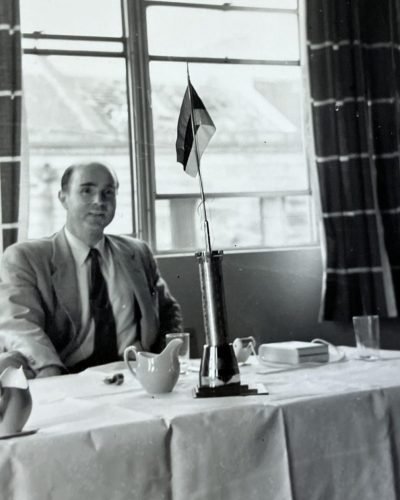
Ilmar Tammelo
Ilmar Tammelo (1917-1982) was a legal philosopher, born in Estonia in the Russian Empire. Tammelo liked to say that his legal studies covered, in quick succession, the laws of Estonia, the Soviet Union, and Nazi Germany. He undertook postgraduate studies in Germany in 1944, and worked as a post-war legal investigator.
In 1948 he came to Australia under the Displaced Persons scheme and would soon enrol in a Masters degree at the University of Melbourne. This paved his pathway to working as a researcher for Professor Julius Stone, at the University of Sydney, and eventually a permanent role at the Sydney Law School.
In 1961 he established the Australian Society of Legal Philosophy which initially met in his home. In 1972, when he was not offered a Chair at Sydney, he took a role at the University of Salzburg.
Read more
Read Tammelo’s biography at the Australian Dictionary of Biography.
Tammelo’s student card at the University of Melbourne.
Some of Tammelo’s papers are held at the Estonian Archives in Australia.
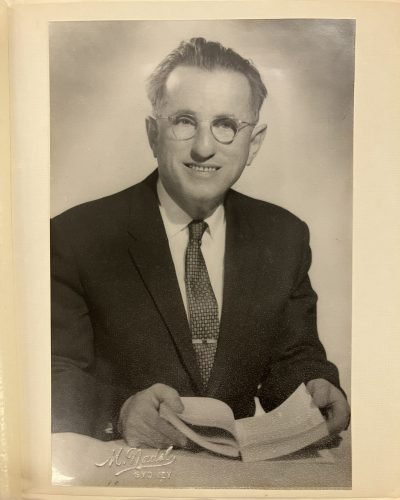
Otto Bondy
Otto Bondy (1904-1976) was born in Vienna. His doctorate was supervised by Hans Kelsen, one of the major figures of twentieth century legal and political philosophy. In 1938, Bondy was struck off the roll of barristers and solicitors in Vienna, on racial grounds. He fled to Sydney with his wife, Gertrud, arriving in March 1939. In Australia, he re-trained as an accountant.
He became a research fellow for Julius Stone and translated some of his work into German. Bondy continued to research and write in the areas of law and morality, epistemology, Jewish law and Kelsen’s pure theory of law. He participated in meetings of the Australian Society of Legal Philosophy, and also served as its President.
Read More
Stone’s obituary for Bondy described him as: “one of the remarkable generation of scholars whose flight from the Nazi threats to personal and intellectual freedom, and to physical survival itself, enriched the intellectual and artistic life of the Western world which gave them refuge.[…] Otto Bondy’s high intelligence and warm heart overleaped the blows of Nazi barbarism and brought him whole into his life and work in Australia”. Some of Otto Bondy’s papers, including his correspondence with Hans Kelsen, are held in the University of New South Wales Library special collections.
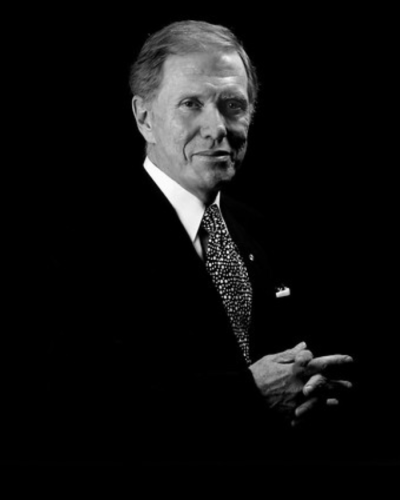
Michael Kirby
Michael Kirby (1939- ) is an Australian judge who served on the High Court of Australia from 1996-2009. An important advocate for human rights and public education, he was a research assistant to Julius Stone, and his Masters thesis was supervised by Ilmar Tammelo. He was an early participant in meetings of the Australian Society of Legal Philosophy.
A collection of his speeches, publications and presentations is available here.
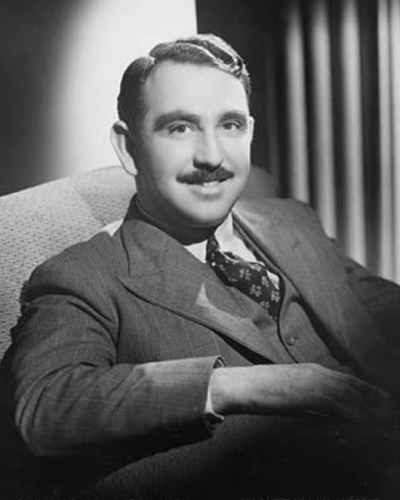
Julius Stone
Read More
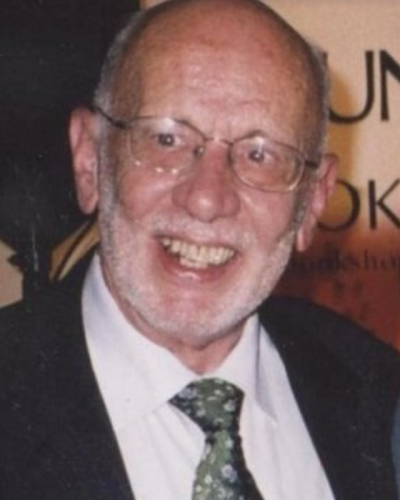
Anthony Blackshield
Anthony (Tony) Blackshield (1937-2025) was an Australian professor of law, expert in constitutional law and jurisprudence, and a civil rights activist. He was a student and colleague of Julius Stone and Ilmar Tammelo, and served as Stone’s research assistant.
He was an early member of the Australian Society of Legal Philosophy. A beloved teacher, colleague, mentor and scholar, he composed complicated rhyming songs about High Court judgments and other legal subjects, to be sung in the tune of popular songs from his youth. Tony gave us a long and generous interview as we were making Emergency Exit, in which he reflected on his memories of Stone, Tammelo and Otto Bondy.
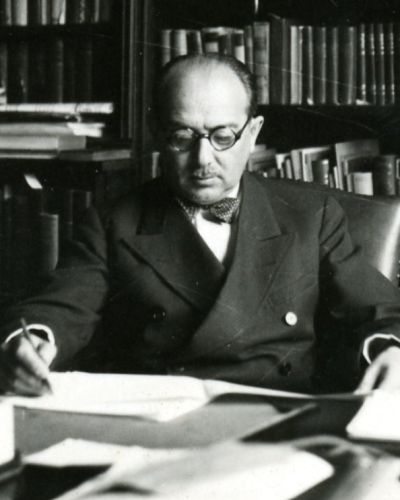
Hans Kelsen
Hans Kelsen (1881-1973) was one of the great legal philosophers of the twentieth century. One of the architects of the Austrian constitution of 1920, he taught at the Universities of Vienna and Cologne until, when the Nazis came to power, he was dismissed on racial and political grounds. He fled to Geneva, and then the United States. In 1945 he became a professor of political science at the University of California, Berkeley.
Hans Kelsen supervised the doctorate of Otto Bondy, and they maintained a lifelong correspondence, which survives in the UNSW Library special collections.
Kelsen is best known for his “pure theory of law”, which was his attempt to separate law from what he saw as the polluting influences of politics and morality, and also to distinguish law from the natural or social sciences. Read more about it here.
Episode credits
Writer and Producer: Olivia Rosenman
Collaborating scholars: Katherine Biber, Sara Dehm, and Ana Filipa Vrdoljak
Additional research: Eloise Chandler
Sound design and audio engineering: Melissa May
Thank you to everyone we interviewed and all the voice actors for this episode: Terry Kass, Michael Kirby, Anthony Blackshield, Arthur Glass, Eureka Henrick, Rain Livoja, Paul McCartan, and Michael Stockenhuber
Special thank you to Danny Mulheron, the grandson of Richard Fuchs, for allowing us to use his grandfather’s music in this episode. Additional music from Blue Dot Sessions.
Emergency Exit was supported by funding from the Australian Research Council.